The performance marketing industry in 2026 is undergoing its most massive transformation in a decade. With the death of third-party cookies, Apple's Link Tracking Protection (LTP), and browser privacy controls, traditional affiliate program strategies are crumbling. Yet, for entrepreneurs who know how to navigate this new landscape, there has never been a better time to launch a CPA (Cost-Per-Action) network.
However, the reality check is harsh: nearly 90% of new CPA networks fail within their first twelve months. It is rarely because they couldn't find affiliates, and it is almost never because they lacked offers. The true killers are payout leaks, cash flow drying up while waiting for advertisers to pay, and edge-level traffic fraud that ruins network reputations overnight. This guide is a battle-tested blueprint to help you bypass those statistics and build a resilient, high-margin CPA network from scratch.
What a CPA Network Actually Is
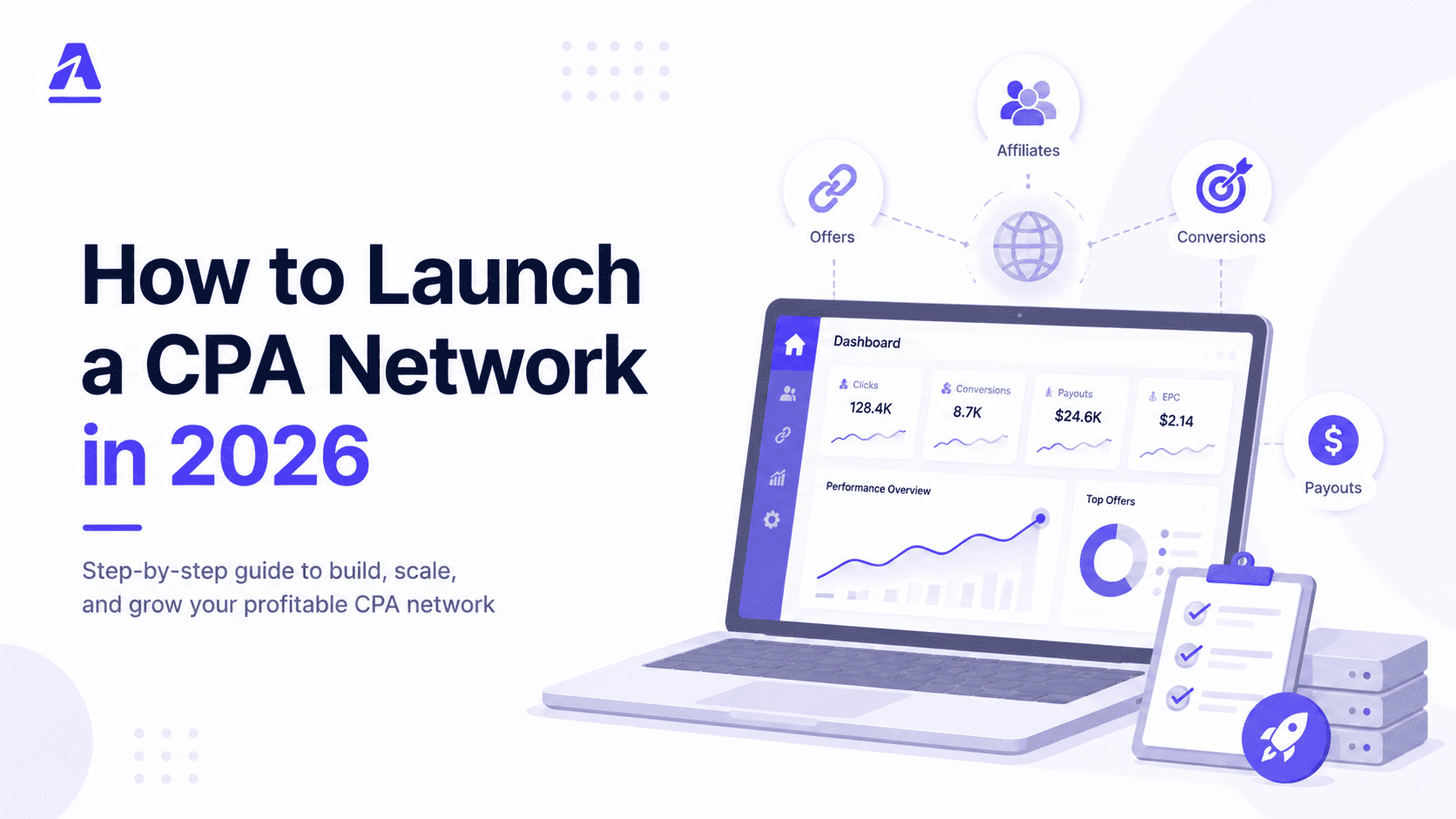
In simple terms, a CPA network functions as a broker between two key parties: Advertisers (brands looking for sales, leads, installs, or subscriptions) and Affiliates (publishers, influencers, or media buyers who drive traffic). The network acts as the trusted middleman, managing the tracking infrastructure, auditing traffic quality, and handling payout accounting.
The beauty of the model is that it is a three-sided marketplace where you, the operator, only pay for results. Unlike traditional agencies that charge flat retainer fees, you earn a percentage of every validated transaction. You provide the security, technical tracking domain routing, and payout consistency that keeps both sides happy.
The Financial Engine: How CPA Networks Make Money
CPA networks make money on the spread—the difference between what the advertiser pays the network per action and what the network pays the affiliate. This margin is calculated using two primary pricing models:
- Fixed Arbitrage (The Spread): The advertiser pays you $15.00 for every validated lead (CPL). You pay your affiliates $11.00 per lead. Your gross margin is $4.00 per lead.
- Revenue Share: The advertiser pays you a 20% revenue split on a purchase. You distribute 15% to the referring affiliate and retain a 5% system platform margin.
While this sounds straightforward, the biggest threat to a startup network is the Cash Flow Gap. Affiliates demand weekly or even daily payouts (Net-7 or Net-1) as a competitive incentive. Advertisers, on the other hand, typically pay on Net-30, Net-60, or even Net-90 terms. If your network drives $50,000 in monthly volume, you must pay your affiliates $35,000 weeks before you ever receive the $50,000 from the advertiser. Managing this float is critical to your survival.
Founder Insight: The Payout Float
Never offer Net-7 payouts to new, unverified affiliates unless you have at least three months of payout capital reserves. If an advertiser delays a payment or contests lead quality, a lack of reserves will bankrupt your network instantly.
Why the Opportunity is Exploding in 2026
In 2026, the performance landscape is heavily defined by privacy protocols. Browsers are actively stripping tracking parameters, and standard cookies are useless for multi-session attribution. Advertisers are struggling to manage direct affiliate relations because their internal attribution pixels are dropping up to 30% of conversions.
CPA networks that utilize cookieless Server-to-Server (S2S) postback tracking bypass browser limitations entirely. By routing click requests through dedicated white-label tracking domains and using cryptographic Transaction IDs, you offer advertisers 100% accurate attribution. You are not just selling traffic; you are selling tracking stability in a privacy-locked web.
The Step-by-Step Launch Blueprint
1. Select a Tight Vertical Niche
Do not attempt to launch a generalist network. Giant networks already own the broad spaces. Instead, target highly specialized verticals where advertisers are desperate for high-intent leads. High-growth niches for 2026 include:
- Fintech & Neobanking (Credit cards, loan applications, crypto wallets)
- Mobile Apps & Gaming (Cost-Per-Install with in-app milestone events)
- Incentive & Loyalty (Cashback rewards, GPT portals, point ledgers)
- Local Lead Generation (Home services, pay-per-call, insurance)
2. Set Up Your Affiliate Network Software & Infrastructure
Building custom tracking databases from scratch costs tens of thousands of dollars and months of development. Successful operators use white-label affiliate network software. When selecting your platform, look for these non-negotiable capabilities:
- Custom Subdomains: The ability to run partner links and redirect paths under your own domain (e.g.,
track.yournetwork.com) to bypass adblockers. - S2S / Webhook Engine: High-speed server-to-server tracking APIs that do not rely on browser cookies.
- AI Fraud Guarding: Edge-level filtering to block proxy traffic, bot subnets, and hardware emulators.
- Multi-Tenant Account Isolation: The ability to segment regional programs or sub-brands cleanly.
3. Source Advertisers and Seed Offers
When you launch, you face a chicken-and-egg problem: affiliates won't join without offers, and advertisers won't give you offers without traffic. You can overcome this via Agency Arbitrage. You can sign up as an affiliate on large, established networks (like ClickBank, CJ, or direct merchant programs), import their top offers into your platform, and let your affiliates run them. Once you prove you can drive volume, you approach advertisers directly to secure direct deals with higher payouts.
4. Recruit and Onboard Affiliates
Avoid recruiting on spam-filled forums. Instead, reach out directly to media buyers on LinkedIn, join specialized Telegram/Discord masterminds, or run targeted search ads. To attract high-quality affiliates, focus on these three value propositions:
- Attribution Integrity: Prove that your cookieless S2S tracking captures conversions that standard pixels miss.
- Faster Payment Cycles: Offer Net-7 payouts for verified traffic once they pass a 14-day quality audit.
- Co-Branded Dashboards: Provide a clean, fully-branded portal where affiliates can track their performance in real-time.
5. Implement Edge Compliance and Fraud Prevention
A single fraudulent affiliate can get your network blocklisted by advertisers. Protect your business by implementing edge security rules. Your software must check incoming clicks against proxy databases, identify canvas hardware signatures, and block duplicate lead registration patterns. Implement a "Pending Clearance Queue" where commissions are held for 30 days to check for lead reversals before payouts are approved.
Realistic Startup Costs: Bootstrapped vs. Funded
How much capital do you actually need to start? Here is a realistic breakdown of the startup costs for launching a CPA network in 2026:
| Expense Category | Bootstrapped Setup | Well-Funded Setup |
|---|---|---|
| CPA Network Software | $200 - $500 / mo (White-label SaaS) | $1,500 - $3,000 / mo (Enterprise API) |
| Domains & Infrastructure | $50 (DNS, SMTP routing setup) | $500 (Dedicated SMTP IP, CDN edge) |
| Legal & Terms Layouts | $100 (Online templates) | $2,000 (Custom privacy counsel) |
| Affiliate Payout Reserves | $2,000 (Minimal float) | $20,000+ (Flexible fast payouts) |
| Total Initial Capital | $2,350 - $2,650 | $24,000+ |
Top Mistakes That Kill New CPA Networks
- Advancing payouts without verification: Paying an affiliate before verifying that the advertiser has approved the conversions.
- Ignoring conversion lag time: Clicks that convert in under one second are almost always automated bot scripts. Always analyze your click-to-lead latency metrics.
- Shared tracking domains: If one affiliate spams, the shared tracking URL gets flagged, blocking traffic across your entire network. Always run affiliates on custom tracking subdomains.
Founder Case Study: Sourcing and Scaling Lead Gen
Consider the journey of a performance agency that launched a niche CPA network targeting the residential solar sector. By utilizing a white-label affiliate tracking software, they mapped their custom domain track.solarleads.com. Instead of chasing broad traffic, they recruited specialized media buyers on Facebook Ads.
On day 45, the network was hit by a coordinated proxy attack, where an affiliate attempted to route 12,000 automated lead registrations. The tracking platform's edge filter flagged the residential proxies and locked the registration loops, saving the network from a $15,000 invalid payout liability. By day 90, the network was routing 450 validated leads daily, maintaining a clean 22% net margin and establishing authority with major solar installers.
Summary & Actionable Next Steps
Launching a CPA network is one of the most profitable ways to scale a performance marketing business in 2026. To get started today, execute these five steps:
- Choose a specialized vertical (e.g., Pay-per-call or Mobile CPI).
- Acquire a premium brand domain and set up your tracking subdomains.
- Integrate a high-speed, white-label performance marketing platform like AffTrax.
- Seed your platform with direct offers or agency arbitrage campaigns.
- Source your first 5 media buyers and start routing attribution cookielessly.
Frequently Asked Questions
1. What is the best CPA network software for startups?
The best software is one that offers cookieless S2S tracking, custom subdomains, real-time edge fraud filtering, and flexible API webhooks. AffTrax is designed specifically to allow new networks to launch under their own branding in under 30 minutes.
2. How do CPA networks prevent affiliate fraud?
Fraud is prevented by checking browser canvas signatures, checking routing headers against active VPN databases, analyzing click-to-conversion lag times, and blocking repeat IP subnets in real-time at edge nodes.
3. Do I need direct advertiser contracts to start?
No. Most networks start by utilizing "Agency Arbitrage," where they run offers sourced from larger networks to build initial traffic volume, moving to direct contracts as their volume scales.
4. What is S2S postback tracking?
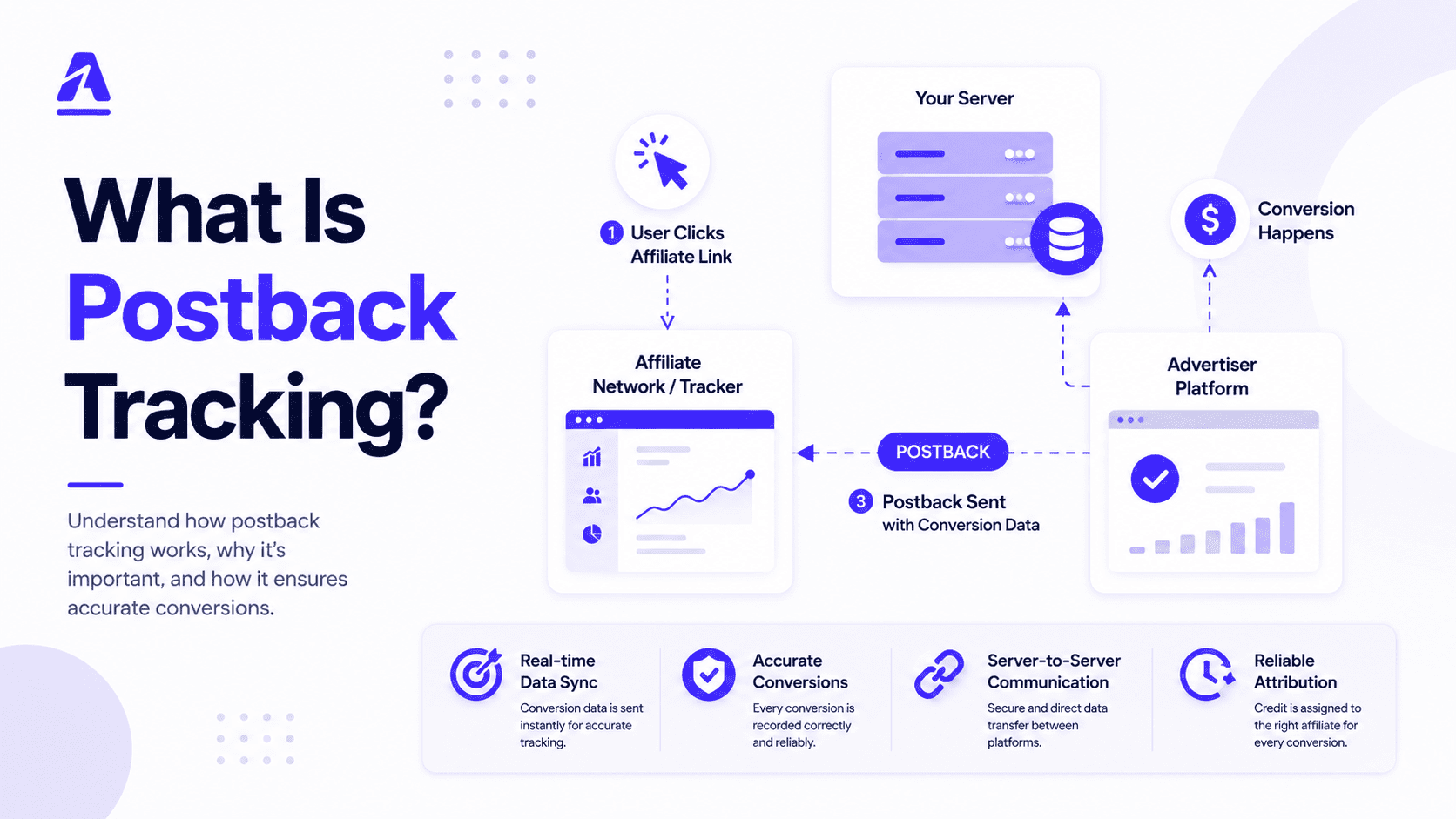
Server-to-Server (S2S) postback tracking is a secure method where conversion data is passed directly from the advertiser's server to the network's database via an API webhook, bypassing browser cookie restrictions.
5. How much money do I need to launch?
You can launch a bootstrapped network with under $3,000 if you utilize a SaaS white-label platform and maintain a strict payout delay while auditing traffic quality.
6. What is the average profit margin for a CPA network?
Average gross margins range between 15% and 25%, depending on the vertical, offer exclusivity, and the volume driven by your publishers.
7. How do I recruit high-quality affiliates?
Reach out directly to proven media buyers on professional channels like LinkedIn or within private mastermind communities, rather than recruiting on open public forums.
8. Why are cookie-based tracking pixels failing?
Modern browsers cap first-party cookie lifespans and block third-party tracking cookies completely, meaning standard pixel tracking drops a significant portion of valid conversion events.
9. Can I run multiple networks under one account?
Yes. If your software supports multi-tenant configurations, you can run isolated client dashboards and tracking domains from a single master administrative system.
10. What is a pending payout queue?
It is a compliance queue where commissions are held in a pending state for a set period (e.g., 30 days) to verify traffic validity and allow advertisers time to clear returns or refunds.
11. How does redirect masking protect my links?
Redirect masking replaces the tracking domain URL parameters in the browser's address bar history, ensuring your partner configurations remain invisible to hijackers.
12. What is Net-7 and Net-30?
Net-7 means payments are issued 7 days after the billing cycle ends. Net-30 means payments are issued 30 days after the invoice date.
13. Can we customize SMTP settings in our network?
Yes. Custom SMTP allows you to route all automated partner notifications (welcome mails, resets, payouts) from your own brand email address.
14. What are tiered affiliate commissions?
It is a payout structure where affiliates earn higher payout rates as they cross specific conversion volume thresholds, encouraging them to scale their traffic.
15. How long does it take to launch a network?
Using a white-label performance marketing engine like AffTrax, you can configure DNS records, add branding styles, and launch your partner network in under 30 minutes.