In the current digital marketing landscape, customer acquisition costs (CAC) are skyrocketing. Standard advertising channels like Google and Meta are becoming increasingly saturated, less predictable, and highly expensive. For B2B SaaS founders, Marketing Directors, e-commerce brand managers, and fintech growth teams, this means that scaling paid advertising alone is a recipe for diminishing returns. To build a highly capital-efficient and scalable customer acquisition machine, companies must tap into the most powerful asset they already own: their existing customer base.
Word-of-mouth marketing has always been the strongest driver of consumer trust, but relying on organic, passive recommendations is not a strategy. You need a structured, predictable engine to capture and amplify customer advocacy. This guide provides an operational blueprint on How to Build a Referral Program that converts customer satisfaction into automated, scalable growth.
Quick Answer: How to Build a Referral Program That Works
To launch a successful customer referral program, follow a 7-step process: First, define concrete goals and trackable KPIs. Second, identify your most advocates and super-users. Third, structure a dual-incentive reward (two-sided reward) that motivates both the referrer and the new buyer. Fourth, design a frictionless sharing process directly inside your user dashboard. Fifth, implement robust backend tracking using a dedicated Referral Program Software. Sixth, actively promote the program across transactional emails and UI touchpoints. Finally, continuously monitor conversion rates and optimize the incentive structure to maximize your viral coefficient (K-factor).
What Is a Referral Program?
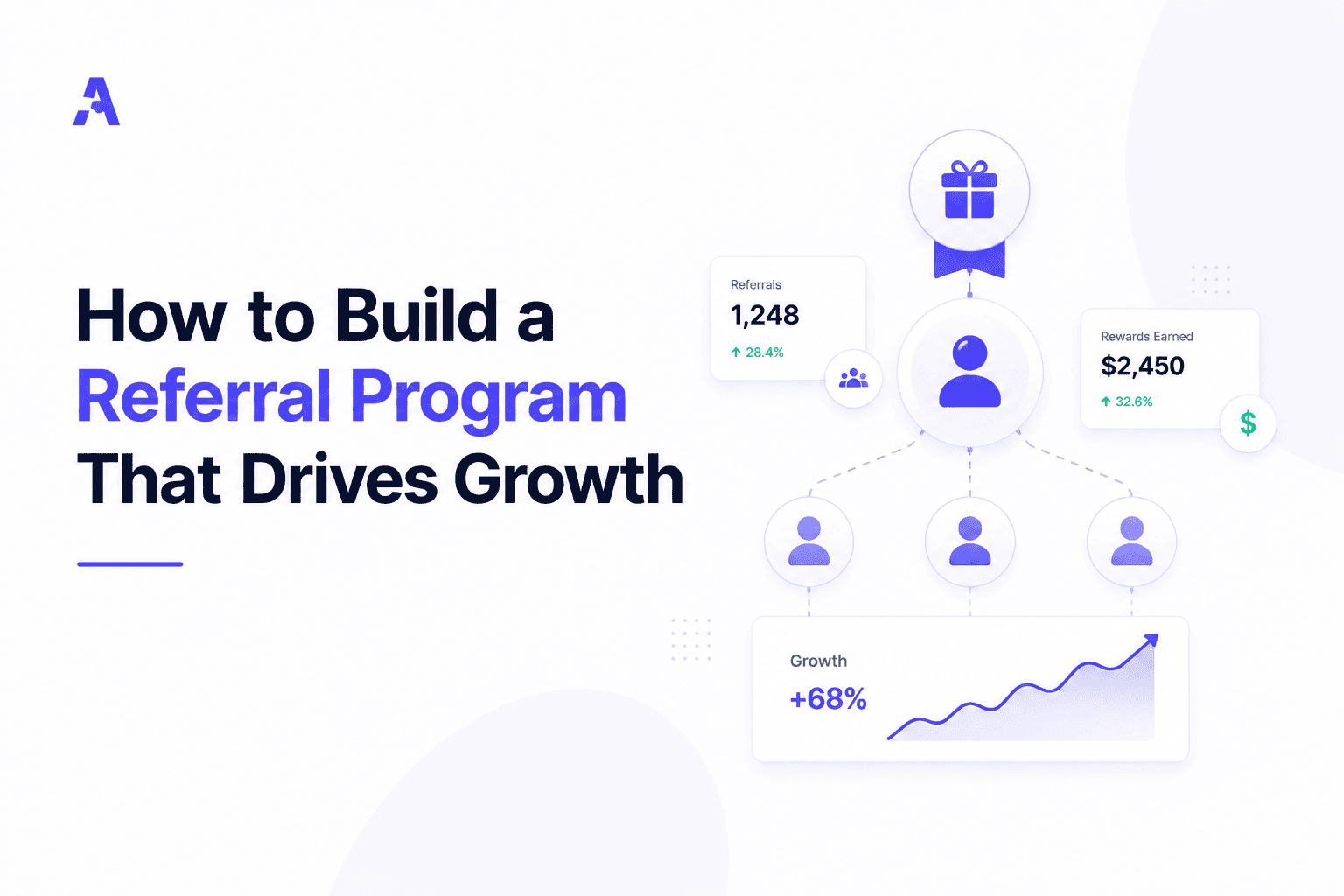
A customer referral program is a structured system that encourages and rewards existing customers (referrers) to recommend your products or services to their professional and personal networks (referees). Unlike organic word-of-mouth, which is passive and untrackable, a referral program provides advocates with unique tracking links or referral codes, automates the distribution of rewards when a transaction completes, and enables detailed analytics on conversion pathways.
Why Referral Marketing Works: The Psychology of Advocacy
Referral marketing is exceptionally effective because it leverages social proof and trust transfers. According to global consumer surveys, over 90% of buyers trust recommendations from people they know over any form of direct corporate advertising. When an existing customer refers your product, they transfer their built-in credibility to your brand, immediately lowering the new user's purchase anxiety.
Under the hood, successful referral loops are driven by three psychological principles:
- Social Currency: People love to look helpful, knowledgeable, and connected. By giving them a valuable offer or exclusive access to share, your program gives referrers social credit in their network.
- Reciprocity: When a user gets value from your product, they naturally feel a desire to return the favor. A referral program gives them a structured way to support your brand. Similarly, when a friend gives them a discount code, they feel obligated to use it.
- Friction Reduction: By automating the referral pathway, you eliminate the awkwardness of asking friends to buy. The incentive provides a logical reason for the recommendation.
The Strategic Benefits of Referral Programs
Beyond simple customer counts, structured referral loops yield superior unit economics compared to paid channels:
| Growth Metric | Paid Acquisition Channels | Referral Program Channel |
|---|---|---|
| Customer Acquisition Cost (CAC) | High and variable (scales with ad network bids). | Low and fixed (paid only when a user converts). |
| Conversion Rate | Low (often under 2% for cold ad traffic). | Very High (referred leads convert up to 4x faster). |
| Customer Lifetime Value (LTV) | Standard (susceptible to churn). | High (referred customers show 16-25% higher retention). |
| Viral Coefficient (K-Factor) | 0 (does not trigger secondary traffic loops). | Compound growth potential (every customer refers new users). |
Step 1: Define Your Goals
Before selecting software or designing incentives, you must establish clear, quantitative objectives for your referral campaign. Without defined targets, you cannot verify whether your acquisition economics make sense. Define your goals around these metrics:
- Acquisition Velocity: E.g., driving 1,000 new verified signups per month.
- CAC Targets: Ensuring that the referral reward payout (plus software overhead) remains below 30% of your customer's average first-purchase value.
- Viral Coefficient (K-factor): Reaching a K-factor of at least 0.15 (meaning every 100 new users successfully recruit 15 additional customers).
Step 2: Identify Your Ideal Referrer
Not all users represent equal advocacy potential. Attempting to spam your entire email database with referral invitations often yields low conversion rates and risks brand fatigue. Instead, segment your users to target your "Advocates Cluster" first:
- Net Promoter Score (NPS) Promoters: Target users who have graded your product a 9 or 10.
- Super-Users & Champions: Identify accounts with high daily session times, deep feature usage, or repeat purchase histories.
- Milestone Achievers: Propose referrals immediately after a user experiences "value events" (e.g., publishing their first campaign, receiving positive analytics reports, or checking out a cart).
Step 3: Choose the Right Incentive Structure
Your incentive model is the core driver of program participation. To choose the right incentive, you must align the reward with your business model and target audience motivation. The primary decision vectors are **One-Sided vs. Two-Sided Rewards** and **Cash vs. Discount Rewards**.
One-Sided vs. Two-Sided Referral Rewards
One-sided rewards compensate only one party (either the referrer or the referee). Two-sided rewards compensate both. In almost every scenario, **two-sided rewards outperform one-sided rewards**.
| Reward Model | Referrer Reward | Referee Reward | Performance Outcome |
|---|---|---|---|
| One-Sided (Referrer Only) | Receives $20 credit | None | Low (referrers feel guilty profiting off friends). |
| One-Sided (Referee Only) | None | Receives $20 discount | Low (referrers lack motivation to share links). |
| Two-Sided (Dual Incentive) | Receives $20 credit | Receives $20 discount | High (aligns motivation and eliminates social guilt). |
Cash Rewards vs. Discount Rewards
Choose your reward type based on purchase frequency. If you operate a B2B SaaS platform or a subscription company with recurring billing, **bill credits** or **cash rebates** are highly valued. If you operate an e-commerce brand with a high purchase frequency, **percentage discounts** or **free shipping vouchers** on future orders encourage repeat conversions.
| Reward Category | Best Fit Business Model | Pros | Cons |
|---|---|---|---|
| Cash / Payouts | Fintech, B2B SaaS, High-ticket items | Strongest universal motivator; drives massive initial engagement. | Higher fraud risk; requires strict billing payouts reconciliation. |
| Discounts / Credits | E-commerce, Subscriptions, Low-cost SaaS | Encourages repeat customer purchases; lowers direct capital payout cost. | Ineffective for single-purchase or low-frequency businesses. |
Step 4: Create a Frictionless Referral Process
Friction is the silent killer of viral growth loops. If your referral signup page requires multiple forms, password creations, or manual approval steps, users will drop off. Keep the referral pathway simple:
- One-Click Sharing: Provide a clean dashboard widget containing pre-written copy and social sharing buttons (WhatsApp, LinkedIn, Twitter) so users can share with one click.
- Automatic Referral Code Injection: When a referee clicks the referral link, your tracking scripts must automatically inject the discount coupon code at checkout, eliminating manual copy-pasting.
- Instant Rewards Distribution: Once the purchase qualifies, trigger the credit or voucher payout immediately to delight the user and encourage repeat shares.
Step 5: Implement Referral Tracking: The Technical Infrastructure
To operate a reliable referral program, your tracking architecture must be accurate, secure, and robust. Building custom tracking logic from scratch is expensive and complex. Growth teams utilize a white-label Referral Program Software or an Affiliate Tracking Software system to manage the attribution ledger.
When selecting your tracking infrastructure, prioritize these technical configurations:
- CNAME Custom Domains: Route tracking links through your own first-party subdomain (e.g.,
share.yourbrand.com). This preserves first-party cookie status and bypasses ad-blockers that flag third-party tracking URLs. - Cookieless S2S Postbacks: Bypasses browser third-party cookie restrictions. Your tracking server generates a cryptographic transaction Click ID on click, which is verified backend-to-backend when the conversion completes.
- Real-Time API Integration: The tracking platform must connect directly with your billing framework (like Stripe or Razorpay) to verify payouts and adjust ledger records dynamically.
Step 6: Promote the Program
Do not hide your referral link in the footer of your website. Promote it actively across multiple touchpoints to maintain advocate engagement:
- Transactional Email Triggers: Include a personalized referral banner in invoice receipts, order updates, and welcome emails.
- In-App UI Hooks: Embed a sticky "Get $20" or "Invite a Colleague" button directly in the main navigation sidebar.
- Post-Purchase Checkout Screen: Prompt e-commerce buyers to share their purchase with friends for a discount voucher on their next order immediately after checkout completes.
Step 7: Measure and Optimize Performance
Analyze cohort performance metrics to locate bottleneck areas in your referral funnel. A standard referral funnel tracks these key conversion metrics:
[Advocate Base]
       │
       ▼  (Participation Rate: % of users who copy/share their link)
[Sharing Advocates]
       │
       ▼  (Clicks per Advocate: number of friend clicks generated)
[Incoming Referral Clicks]
       │
       ▼  (Friend Conversion Rate: % of referred clicks that sign up/buy)
[Referred Customers]
Audit this funnel regularly. If your participation rate is low, make the sharing buttons more prominent or test higher rewards. If your friend conversion rate is low, optimize the landing page experience for referred visitors.
Referral Marketing vs. Affiliate Marketing
While both frameworks operate on a pay-for-performance model, they serve different customer acquisition strategies:
| Dimension | Referral Marketing | Affiliate Marketing |
|---|---|---|
| Advocate Relationship | Existing customers, users, super-advocates. | Professional publishers, review sites, media buyers. |
| Primary Motivation | Product advocacy, brand love, shared user perks. | Financial revenue, commission margins, lead arbitrage. |
| Reward Structure | Usually co-branded credits, vouchers, or product perks. | Direct cash payouts, revenue splits, or flat CPA rates. |
| Compliance Overhead | Low (monitored via email logins). | High (requires tax documents, affiliate networks verification). |
If you want to manage professional content publishers or run media buying campaigns, utilize an Affiliate Management Software or Partner Management Software. If you want to leverage customer word-of-mouth loops, build a referral program.
Real-World Referral Program Examples
1. B2B SaaS: Dropbox
Dropbox is the classic referral benchmark. Faced with high ad bids on search keywords, they launched a two-sided referral program where both the referrer and the referred friend received 500MB of free cloud storage space. The program costs Dropbox zero direct capital payouts, bypasses standard advertising networks, and increased their signup volume by 3900% in 15 months.
2. E-commerce: Airbnb
Airbnb scaled globally by offering a two-sided credit reward. Users who referred a friend received $25 in travel credit when the friend completed their first booking, and the friend received $40 off their reservation. Airbnb optimized this loop by adding personalized user photos and recommendation copy in emails, ensuring the invitation felt like a gift from a friend rather than a marketing push.
3. Fintech: Robinhood
Robinhood drove massive user growth by offering a gamified, one-sided reward. When a user referred a friend, they both received a free random stock share value between $3 and $150. The gamified scratch-card style unlock triggered high viral sharing on social channels, scaling their user count to millions with minimal CPA overhead.
4. Mobile App: Uber
Uber scaled regional markets by offering a simple dual credit loop: "Give a free ride, get a free ride." Both the advocate and the referred friend received ride vouchers for their first trips, driving rapid customer acquisition and establishing local driver-rider liquidity in new cities within weeks.
Common Referral Program Mistakes (Why They Fail)
- Friction-Heavy Referral Pathways: Forcing advocates to log out, register on a separate portal, and generate codes manually before they can share a link.
- Delayed or Complex Payout Terms: Withholding credits for months or requiring complex steps to redeem vouchers. Keep the payout cycle fast.
- Irrelevant Reward Choices: Offering discount coupons on single-purchase services where users have no need for a second transaction.
- Passive Launch Strategies: Launching the program and hiding the links in the account settings menu, expecting users to find it on their own.
How to Prevent Referral Program Fraud
Because referral programs offer direct financial value, they attract fraud. Abusers open duplicate accounts using temp emails and VPNs to self-refer their links and collect bonuses. To protect your margins, implement Affiliate Fraud Detection layers:
- Block Duplicate Device Signatures: Canvas fingerprinting verifies that multiple referred accounts are not registering from the same physical phone or computer.
- IP & Proxy Filtering: Check click addresses against VPN and proxy lists at the network edge to block synthetic traffic routes.
- Require Purchase Events: Avoid issuing rewards on simple email signups. Tie payouts to validated billing events or postback confirmations from your merchant database.
Referral Program KPIs to Track
- Participation Rate: The percentage of active users who generate or copy their referral links (target: 15-30%).
- Viral Coefficient (K-factor): The number of new customers generated by each existing advocate (target: >0.15).
- Referred Lead Conversion Rate: The percentage of referred clicks that turn into active buyers (target: 10-25%).
- Cohort Retention: The long-term retention rate of referred customers compared to paid channels (target: >20% improvement).
How to Scale Your Referral Program
Once your referral engine is stable, maximize your viral growth using these scaling playbooks:
- Tiered Rewards (Milestones Program): Introduce gamified tiers. E.g., refer 5 friends for $50 credit, refer 10 friends to unlock an exclusive brand hoodie, refer 25 friends for VIP event access.
- Seasonal Campaigns: Run limited-time bonus sprints (e.g., "Refer a colleague this week to earn double credits") to reactivate passive advocates.
- Influencer Advocacy Integration: Bridge your program into an influencer channel, offering premium payout terms and co-branded landing pages to creators with large audiences.
Future Trends in Referral Marketing
The referral landscape in 2026 is moving toward decentralized database verification and open banking integrations. Card-linked offers (CLOs) allow users to secure referral cashback directly to their bank account when they spend at a merchant, bypassing browser-side tracking and cookies. Edge-first tracking systems (like AffTrax) are automating these hooks, enabling brands to scale global incentive marketing channels with 100% attribution accuracy on first-party domains.
Frequently Asked Questions
1. How do you track referrals accurately?
Referrals are tracked by appending unique advocate sub-IDs to links. When clicked, the server logs a session token. When checkout occurs, the merchant server fires a postback callback webhook to the tracker to reconcile attribution.
2. What is a two-sided referral reward?
A two-sided reward compensates both the advocate who shares the link and the referred friend who converts. This dual incentive eliminates social guilt and boosts sharing conversion rates.
3. Why do most referral programs fail?
Most fail due to friction-heavy sharing funnels, delayed payout releases, weak incentives, or hiding the referral buttons inside the dashboard where users cannot find them.
4. Can you run a referral program without software?
While possible at micro-scale using manual coupon sheets, it quickly becomes unmanageable. Scaling requires dedicated tracking software to automate link generation, prevent fraud, and reconcile payouts.
5. How does a referral K-factor work?
The K-factor measures your virality. It is calculated by multiplying the participation rate by the conversion rate of referred links. A K-factor of 0.2 means every 10 new users generate 2 additional customers.
6. What is the difference between a referral program and an affiliate program?
Referral programs target existing customers seeking product credits or community perks. Affiliate programs target professional publishers and media buyers seeking cash commissions.
7. How do I prevent users from referring themselves?
Prevent self-referrals by tracking device signatures, checking browser canvas fingerprinting, blocking duplicate geolocations, and requiring a credit card purchase to clear rewards.
8. What is the average conversion rate of referred leads?
Referred leads convert at an average rate of 10% to 25%, which is significantly higher than cold ad traffic (typically under 2%), due to pre-existing trust from the advocate.
9. Should I offer cash or product credits for referrals?
Offer cash if your purchase cycle is infrequent (like fintech or high-ticket items). Offer product credits or discounts if you run a subscription SaaS or a recurring e-commerce store.
10. How do CNAME domains protect referral tracking?
Mapping a CNAME record points your tracking link to your first-party domain (e.g., share.yoursite.com), which prevents ad-blockers from intercepting and blocking redirect calls.
11. What is an incentive marketing platform?
It is a backend technology suite designed to manage user points ledgers, coordinate reward distribution webhooks, and validate conversion events securely.
12. Do referral links use cookies?
Modern referral platforms use cookieless server-to-server (S2S) tracking, storing click IDs directly in backend databases rather than relying on browser-side cookie files.
13. How do I write copy for referral invitations?
Keep it personal. Write from the advocate's perspective (e.g., "I've been using this tool to save time, here is $20 to try it out") rather than using promotional brand copy.
14. How long should a pending referral check take?
Hold rewards in a pending queue for 30 to 60 days to match your product's return or refund window, preventing fraud rings from buying items and immediately returning them after collecting payouts.
15. What are the key KPIs for measuring referral program success?
The critical KPIs are participation rate (advocate sharing), referral click-through rate, referred lead conversion rate, CAC savings, and K-factor viral multiplier.
Conclusion
Building a customer referral program is one of the most cost-effective strategies to drive scalable, high-LTV growth. By choosing a dual-incentive structure, eliminating sharing friction, and deploying a secure tracking infrastructure, you turn satisfied customers into a high-performance customer acquisition channel. If you are ready to launch a branded, white-label referral program running on edge-first cookieless tracking subdomains, explore the tracking architecture of Referral Program Software options like AffTrax to power your program today.